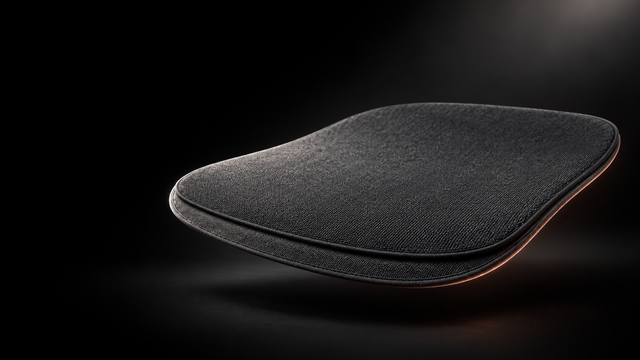
A cover, a cushion and a chair do different jobs
An ordinary cushion changes the surface you sit on. A replacement ergonomic chair changes the chair itself. Kiso Axis adds a pressure-sensing layer and a cue while leaving your existing chair in place. It is not a replacement backrest or a promise to make every seat suitable.
Start with the problem you want to solve: a different seat feel, a different chair, or a reminder to notice how you are sitting. The sensing cover is designed around the last of these. Its thin profile does not remove the need to check seat shape and stability.
How the quiet cue is meant to work
The cover learns a personal sitting baseline. Contact, balance and time help it distinguish a passing reach or turn from drift that stays. Ordinary movement is part of sitting; the aim is not to hold one frozen pose.
When a sustained pattern earns a cue, the haptic layer gives a private signal. Settings and calibration belong to the companion experience. The website demos illustrate the intended behavior; they are not live sensor readings or evidence of a finished production unit.
What to check before choosing one
Check your exact chair, not just its brand. Stable, sufficiently flat seats are the starting point; mesh, deep contours and plush surfaces require review. Heated, powered or actively moving seats are excluded from the current fit flow.
Kiso Axis is a comfort and awareness product, not a medical device. The site does not establish treatment outcomes or guarantee a posture change. First Edition is Japan first; international visitors can join for launch updates before any local purchase terms are announced.