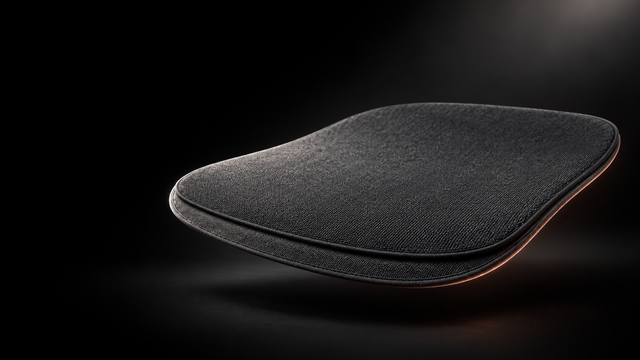
1. Stability and 2. a surface that stays flat
Start with a stable placement. If the cover would shift, fold or sit on an unstable surface, a promising brand name does not solve the fit problem. The current check rules out an unstable placement or a surface that cannot support the cover flat.
Look at the whole contact area rather than one measurement in a catalogue. A soft center, a pronounced slope or a curved shell can change how a cover rests. An unanswered question stays incomplete; uncertainty is never treated as a pass.
3. Side bolsters and 4. the front edge
Raised sides and deep bucket shapes may stop the cover from lying naturally. The front edge matters too: the cover should not have to bridge, fold or hang over a shape that needs separate assessment. Use the model-specific drawing in the fit check to understand each question.
Mesh, contoured and plush seats remain in the review category even when all five answers look favorable. Their construction needs a closer look. The library helps you find the model; the check records the conditions of your particular seat.
5. Active mechanisms and what your result means
Powered, heated and actively moving seats are excluded from the current flow. Do not reinterpret that exclusion as an invitation to switch the mechanism off and assume compatibility. The fit checker applies exclusions before calculating any promising result.
A conventional seat with five complete favorable answers can be marked promising. That result is not an allocation, a certification or a fit guarantee. Keep the exact model and the result when moving into early access; Japanese visitors can copy a chair memo for their LINE conversation.